Pages

Showing posts with label Dyslexia Awareness Week. Show all posts

Tuesday, October 6, 2020

Dyslexia FAQs

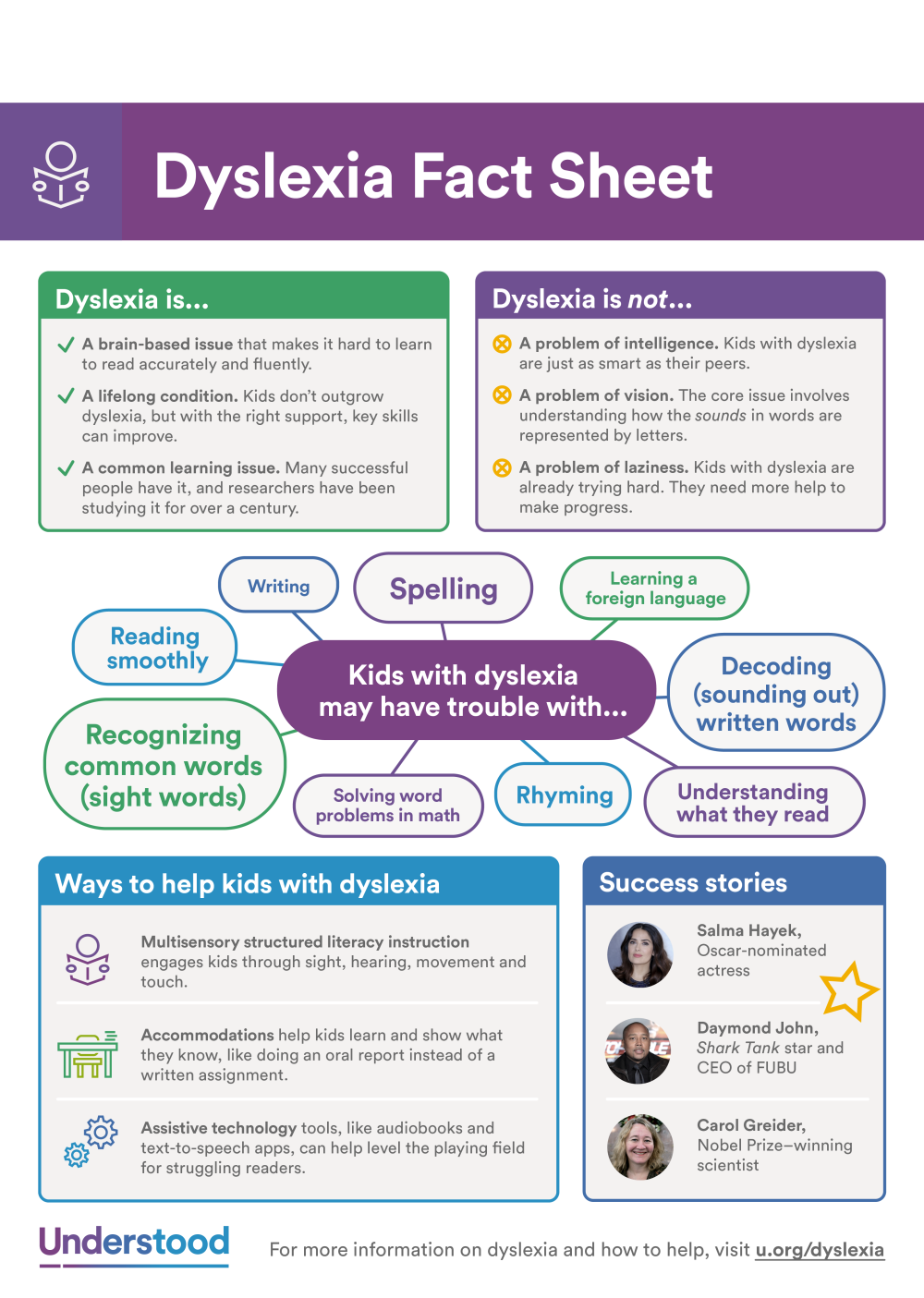
Imagine what it would be like to look at a page of text and see distorted letters swirling before your eyes. Try to picture not being able to discriminate between the letters b d p q. This is the case for many dyslexic people. Dyslexia affects areas of the brain that process language. Broadening your understanding dyslexia can help you to begin understanding the difficulties of living with it.


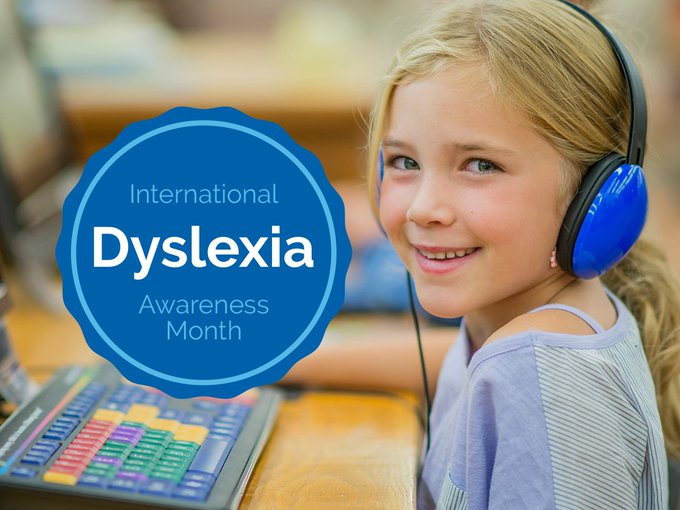
October is National Dyslexia Awareness Month. The focus for this next month will be to shine a spotlight on the varying dyslexic needs, struggles, and signs and raise awareness about the struggles associated with dyslexia. Often times families of individuals diagnosed with Dyslexia are left with many questions concerning the effects and the resources available for improvement. By recognizing the significant educational implications of this learning difference, there is more opportunity to ensure early diagnosis and intervention for dyslexics. The University of Michigan has created a list of frequently asked questions to help provide information and insight. As we know, the earlier the diagnoses and interventions, the more opportunities to reduce the educational implications this learning difference can have.

Thursday, October 1, 2020

Dyslexia Awareness Month Resources

Dyslexia Awareness Month is aimed at encouraging appropriate screening, assessment and intervention for those living with dyslexia. Additionally, it provides a platform to provide education on and debunk the myths about dyslexia. Take a look back at some of the incredible resources previously posted about dyslexia on Where It's AT to help kick off this week. Be sure to stay tuned here for more valuable resources to come! 

    Visit some links and previous Where It'AT blog posts...


Thursday, October 17, 2019

Tuesday, October 15, 2019

Dyslexia Awareness Quiz


October is International Dyslexia Awareness Month. The folks at Learning Ally are committed to advocating for struggling students to get the support and services they need to thrive in school. The following quiz helps to deepen your understanding of dyslexia. Please share with your family and friends to spread awareness about learning differences. 

                                                     Take the quiz here 

Image

Wednesday, October 9, 2019

Walk In The Shoes of a Dyslexic Simulation - Chagrin Falls, OH


Experience what it feels like to struggle with reading and writing, and learn how to help.
About this Event

How does it feel to be an individual with dyslexia? Through a series of simulations, participants will experience the challenges individuals with dyslexia confront when performing language-related tasks. This hands-on workshop is designed to improve understanding and encourage the use of effective teaching techniques and accommodations.

This is a worthwhile public event for families and professionals who interact with dyslexics. Space is limited for reserved seating. RSVP your spot today!

Date And Time
Mon, October 14, 2019
6:30 PM – 8:30 PM EDT

Location
Chagrin Falls Intermediate Elementary School
77 East Washington Street
Chagrin Falls, OH 44022


Tuesday, October 8, 2019

The Dyslexia Dilemma: The Role of Colleges of Education

Image result for dyslexiaIn a time where dyslexia has become widely studied and one of the most commonly recognized learning difference, the educational systems need to be diligent and ensuring those on the front line working with the students can adequately support them. The education and awareness of how to support students with dyslexia must begin at the pre-service or collegiate level. Pre-service teachers must be competent to teach reading to all students, especially those who are at-risk or experiencing reading failure. 

The following article, The Dyslexia Dilemma: The Role of Colleges of Education by David P. Hurford, Ph.D. and Lauren P. Renner, Ed.S., was featured on the International Dyslexia Association's website and focuses on the necessity for changes to begin to ensure that the science of reading becomes part of the curricula in colleges of education. 


Thursday, October 19, 2017

Dyslexia Awareness Month: Suggested Books for Students with Learning Differences


Loneliness is a feeling many young children with learning disabilities experience when compared to their neurotypical peers. As parents and educators, we need to do more to focus our efforts on supporting our students with learning disabilities. Beyond helping them learn to achieve academically, we also need to tend to their socio-emotional needs.

Learning Ally's 1 in 5 initiative is a community developed to support students with learning disabilities, with an emphasis on dyslexia. In addition to a wide array of resources, 1 in 5 provides a list of suggested books to support students with learning disabilities. By reading about other children's experiences, this may decrease the feelings of loneliness and isolation.


To learn more about Learning Ally's 1 in 5 Initiative, visit the link here:


Monday, October 9, 2017

Thursday, October 5, 2017

Dyslexia Awareness Month: Dyslexia Explained eBook


Although dyslexia has become a more common discussion in classrooms and homes, it is certainly not a black and white disability. Just like snowflakes, each person with dyslexia is unique in how their disability manifests. If you’ve heard the term dyslexia and aren’t sure what it means, you’re not alone. Many questions tend to arise when it comes to dyslexia.The incredible folks at Nessy created an eBook, Dyslexia Explained, to provide answers and help others develop a better understanding of dyslexia. Below you can find an overview of the book and the chapters highlighted. Click here to access the full Dyslexia Explained eBook.


Click here to access the full

Wednesday, October 4, 2017

Tuesday, October 3, 2017

Dyslexia Awareness Month: 10 Classroom Indicators of Dyslexia


The following list of 10 Classroom Indicators of Dyslexia was created and compiled by Nessy. Nessy has been making fun, educational software for children since 1999 and has developed a reputation for exceptional quality. Nessy offers the complete dyslexia aware solution with a suite of multi-sensory products aimed at making learning to read, write and spell fun. Nessy has a fun, multi-sensory approach to learning through games, videos, worksheets and a suite of apps to help build confidence and teach valuable reading, writing and spelling skills. Visit the Nessy website to learn more about the products they offer.

To read the original article click here.


Signs of dyslexia usually become more obvious when children start school and begin to focus on reading and writing. Here are ten of the most common warning signs.
Dyslexia Warning Signs

1. Phonological awareness

This is the ability to recognise individual sounds (phonemes) and work with phonemes to create new words.
Typical problems are:
  • Confusing vowel sounds, e.g. writing ‘i’ for ‘e’.
  • Difficulty rhyming.
  • Chunking words into syllables.
  • Blending sounds into a whole word.
dyslexic signs

2. Typical spelling mistakes

  • Spelling words as they sound
  • e.g. wont instead of want
  • Mixing up the sequence of letters
  • e.g. hlep instead of help
  • Reversing the sequence of letters
  • e.g. was instead of saw
  • Missing out a letter
  • e.g. wich instead of which
  • Using the wrong letter
  • e.g. showt instead of shout
  • Adding an extra letter
  • e.g. whent instead of went
  • Using a ‘t’ instead of ‘ed’
  • e.g. lookt instead of looked
  • Can’t remember when to use ‘ck’ or ‘ke’ at the end
  • e.g. lick instead of like

    Words and letters are often jumbled in the mind.
    words get jumbled in my head

    3. Unable to remember times tables and number sequences


    A multiplication fact may seem to be learned and then a few days later has been forgotten again.
    The same goes for phone and pin numbers. Difficulty remembering a sequence of numbers is a sure sign of dyslexia.
    Unable to remember times tables and number sequences

    4. Writing

    Someone with dyslexia is likely to have lots of ideas but have difficulty putting them into writing.
    They will take much longer to write and produce less than other students.
    Many people with dyslexia write long, rambling sentences with no punctuation.
    Although there may be lots of ideas they often do not know where to start.
    Dyslexics Have Lots Of Ideas But Can't Write Them Down

    5. Reading

    Immediately forgetting what has just been read.
    Slower reading speed.
    Missing out words or skipping lines as they read.
    eyes skip over letters and words

    Have you ever read a page, got to the bottom and realised you’ve just forgotten everything you read?This happens all the time to those with dyslexia. Words and their meanings don’t stick very well.
    Reading becomes slow when you have to work out every word.
    So much mental energy is used on the process that no memory capacity is left to comprehend.

    Dyslexia means you may read a word and then further down the page not recognise it again. There is no visual memory of the word.
    Their eyes can seem to jump over words, missing them out, skip out whole lines, sometimes they just skip part of a word.

    6. Homophones: there – their

    A homophone sounds the same as another word but is spelled differently.
    They are a nightmare for those with dyslexia who usually have a poor memory for how a word looks and quickly learn to rely upon the strategy of learning to spell a word by building it phonetically. This doesn’t work for homophones.
    Homophones are words that sound the same but are spelled differently

    7. Do you know the Alphabet? Backwards!


    Dyslexia causes difficulty recalling sequences accurately so it is very likely that learning the alphabet will be problematic.
    Using songs and rhyme often helps but the real giveaway is whether they can say it backwards – a nearly impossible task for those with dyslexia!
    Dyslexia is also likely to cause problems learning the names and sounds of letters.
    Dyslexia causes difficulty recalling sequences accurately

    8. Mixing up left and right

    It has become a cliché but its true that many with dyslexia cannot learn to automatically remember left and right. They have to stop and think about it.
    dyslexia causes left -right confusion

    9. Can’t remember what you’ve been told


    A sure sign is difficulty carrying out a sequence of directions.

    “Get out your book. Turn to page 23. Read three pages.”

    Someone with dyslexia might only remember one of these things and have to ask again. Having to ask again makes them feel stupid.
    Forgetting Instructions

    10. Reversing numbers

    Someone with dyslexia might see 57 but remember it as 75
    Or write the answer to 6×7 as 24 instead of 42.
    The output of the information becomes muddled.
    reversing numbers is a sign of dyslexia

    Children with dyslexia that have been taught phonics can often learn to say the individual sounds but not blend them together. They can’t hold the sequence of sounds in their head for long enough. They might just panic and guess wildly.
    Remember, no two people with dyslexia are exactly the same so any child with dyslexia is likely to have a mix of these signs of dyslexia.

    Source: Nessy