
Showing posts with label National Dyslexia Awareness Month. Show all posts
Showing posts with label National Dyslexia Awareness Month. Show all posts
Thursday, September 29, 2022

Wednesday, October 13, 2021
Webinar Wednesday: Top Tips for Dyslexia and Technology
To help celebrate Dyslexia Awareness Month, Dafydd Henke-Reed, Head of Accessibility at AbilityNet shared his expert advice about dyslexia and technology in a free webinar. Dafydd championed the ways technology has helped with his dyslexia. He examined the digital barriers to avoid and explained good practice for enabling dyslexic users online.
This webinar covers the range of topics including:
If you're dyslexic, are looking for advice about how technology can help you, or are interested in how technology can revolutionize the learning experience for those with dyslexia be sure to watch. For digital professionals, the free session also examines digital barriers to avoid, and what you can do to make your websites more accessible for people with dyslexia and other cognitive issues.

Additional Useful resources
Factsheet: Dyslexia and Technology
Designing for Accessibility posters from UK Home Office website
AbilityNet's digital accessibility training courses
This webinar covers the range of topics including:
- Challenges with communication including written text and verbal communication
- Tech and tools available to help with dyslexia, including emojis, voice chat, and multimedia messaging
- Speech to text software: Dragon Naturally Speaking, Siri / Alexa, Office Dictate, Mac OS / iOS Dictation
- Text to speech software: Read & Write, ClaroRead, Office Speak, Mac OS / iOS Speech
If you're dyslexic, are looking for advice about how technology can help you, or are interested in how technology can revolutionize the learning experience for those with dyslexia be sure to watch. For digital professionals, the free session also examines digital barriers to avoid, and what you can do to make your websites more accessible for people with dyslexia and other cognitive issues.
Additional Useful resources
Factsheet: Dyslexia and Technology
Designing for Accessibility posters from UK Home Office website
AbilityNet's digital accessibility training courses


Thursday, October 7, 2021
Jamie Oliver Made By Dyslexia Interview
Jamie Oliver talks to madebydyslexia.org about his dyslexia and shares personal insights and advice.
Friday, October 1, 2021
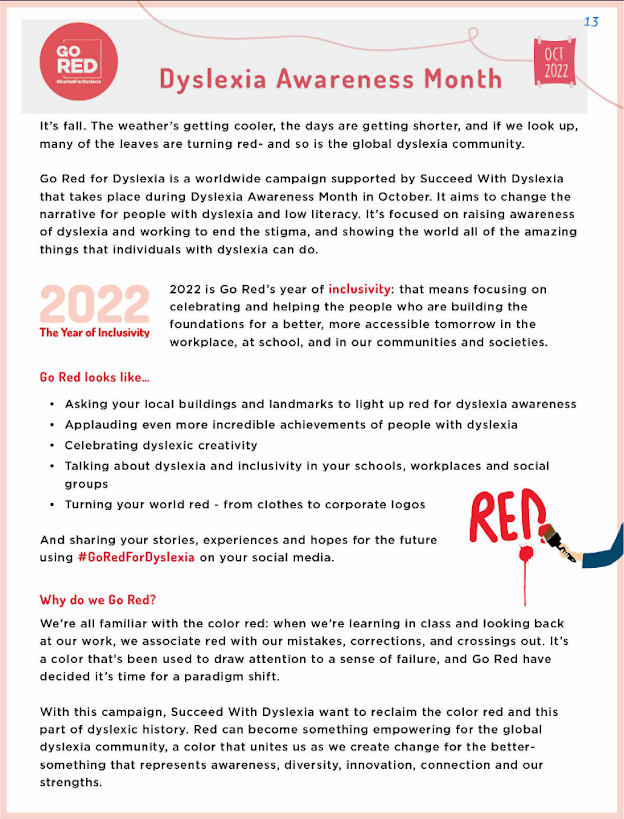
Dyslexia Awareness Month

To learn more about Wear Red for Dyslexia Day visit The #SucceedWithDyslexia Facebook page.
Tuesday, November 10, 2020
Dyslexia is a Superpower, Not a Disability
I was casually (and I must admit mindlessly) scrolling through my Instagram feed when I came across a post from Made by Dyslexia. As an educator and technology specialist who works so closely with so many dyslexic students this video really hit home. We have an important responsibility to guide students with "dis"abilities to shift the stigmas and mindsets that surround their classifications and allow them to see the gifts that their "dis"abilities provide for them. Take a moment to watch this video, which showcases the positive impact adults have on helping students shift how they view themselves and their abilities.

Wednesday, October 7, 2020
Webinar Wednesday: Empowering Learners with Dyslexia to Acquire and Utilize Their Digital Voice

Empowering Learners with Dyslexia to Acquire and Utilize Their Digital Voices
Thursday, October 8, 2020 @ 3:00 pm - 4:00 pm EDT

Presented by Nanci K. Shepardson, M.S.Ed., Ed.S. W.D.P., Senior Educational Technologist, Wilson Language Training
Hosted by Terrie Noland, C.A.L.P., Vice President, Educator Initiatives, Learning Ally
Sponsored by Learning Ally
Attendance for the live presentation is limited to 1,000.
You can sign up below to receive an email with the recording link.
GET THE RECORDINGThe recording will be posted on this page after the live session.
Get a CE Certificate for this edWebinar Learn more
Students with dyslexia often find their voice drowned out by their peers. Using technology to give them a voice is empowering and can lead to greater confidence!
To effectively facilitate student voices on a digital platform, you need an understanding of what digital literacy is and how it can be leveraged to enable positive outcomes for all students, particularly those with dyslexia. Sifting through all of the available online learning tools can quickly become an overwhelming task; this edWebinar will narrow the field, first by viewing them through the important lens of online privacy, equity, and access, and finally by sorting them by the following categories: physical tools, back channeling, web-based add-ons, general apps, assessment tools, video and audio tools, digital storytelling, presentation tools, organization tools, and blogging.
PreK-12 teachers and school and district leaders will find this interactive session informative and leave with clear takeaways that can be implemented in an in-person, distance or hybrid learning environment. There will be time for questions at the end of the presentation.
 About the Presenter
Nanci Shepardson is a reading and educational specialist. She graduated from Wheelock College in 1989 with a bachelor’s degree in preschool/kindergarten curriculum and infant/ toddler development. In 2010, she graduated from Simmons University with an M.S.Ed. in language and literacy and an Ed.S. in assistive technology.
Nanci is a seasoned teacher, a credentialed K-12 reading specialist, and an International Dyslexia Association and Wilson Reading System Dyslexia Practitioner (WRS Level 1 Certified). Nanci has taught kindergarten, second grade, and fourth grade, and was a reading and educational specialist for grades seven through postgraduate and has tutored all ages. She consults for the International Dyslexia Association, she is an advocate for students with disabilities and their families and is also a professional speaker on dyslexia, language-based disabilities, and assistive technology throughout the country. Prior to joining Wilson Language Training, she was the head of Learning Resources at The Chapin School in Manhattan.
As the senior educational technologist at Wilson Language Training, Nanci works in the Program Development Department. In her role, she works with the Wilson Reading System (WRS) team and the technology team to create traditional and digital tools that will augment the current WRS curriculum and materials. She stays abreast of the current technological trends and serves as a resource for parents, teachers, and schools on assistive technology. Nanci is also a parent of a grown child with dyslexia.
 About the Host
Terrie Noland serves as Vice President of Educator Initiatives at Learning Ally, where she works to develop engagement programs, shares knowledge through strategic relationships, and promotes communities for educators. She has more than 25 years of experience as both a motivational leader and developer of content for educators and administrators. She has had the opportunity to lead and facilitate groups numbering in the thousands, inspiring them around a transformational change in their approach to struggling readers. Terrie is certified as an Academic Language Practitioner and is currently working towards a Ph.D. in literacy, with an emphasis in educational leadership from St. John’s University. She is also a certified John Maxwell speaker and facilitator.
To participate in the live edWebinar, log in with current version of Google Chrome or install the meeting app prior to the edWebinar on your computer, your Apple device, or Android device. If you have a firewall in your location, you can participate on your mobile device using your cellular data (not your local network).
The edWebinar recording will be posted to this page the day after the presentation.
Join the Empowering Struggling Readers community to network with educators, participate in online discussions, receive invitations to upcoming edWebinars, and view recordings of previous programs to earn CE certificates.
 Learning Ally is a leading education solutions organization committed to transforming the lives of struggling learners. The Learning Ally Audiobook Solution is a proven reading accommodation comprised of human-read audiobooks, student centric features and a suite of teacher resources. Used in more than 17,000 schools, this solution successfully helps students with reading deficits become engaged learners and reach their academic potential.
Tuesday, October 6, 2020
Dyslexia FAQs
Imagine what it would be like to look at a page of text and see distorted letters swirling before your eyes. Try to picture not being able to discriminate between the letters b d p q. This is the case for many dyslexic people. Dyslexia affects areas of the brain that process language. Broadening your understanding dyslexia can help you to begin understanding the difficulties of living with it.

October is National Dyslexia Awareness Month. The focus for this next month will be to shine a spotlight on the varying dyslexic needs, struggles, and signs and raise awareness about the struggles associated with dyslexia. Often times families of individuals diagnosed with Dyslexia are left with many questions concerning the effects and the resources available for improvement. By recognizing the significant educational implications of this learning difference, there is more opportunity to ensure early diagnosis and intervention for dyslexics. The University of Michigan has created a list of frequently asked questions to help provide information and insight. As we know, the earlier the diagnoses and interventions, the more opportunities to reduce the educational implications this learning difference can have.
Thursday, October 1, 2020
Dyslexia Awareness Month Resources


Visit some links and previous Where It's AT blog posts...
- National Right to Read Foundation Checklist
- The Road to Decode for Dyslexia Awareness Month
- ‘All I Want To Do Is Be Somebody’: Henry Winkler On Lifelong Struggle With Dyslexia
- Student with Dyslexia Discovers What It’s Like to Read: Emery’s Story
- Explicit Phonics Instruction: It's Not Just for Students With Dyslexia
- Dyslexia and Visual Processing Issues
- Accommodating Students With Dyslexia
- 5 Important Steps to Navigating Dyslexia
- Dyslexia Facts
- The Creative Brilliance of Dyslexia | Kate Griggs | TEDxBrighton
- Myths and Truths About Dyslexia
- Accommodating Students with Dyslexia
- Accommodating Students with Dyslexia: 12 Strategies for Success
- Dyslexia Fact Sheet
- 9 Strengths of a Dyslexic by Nessy
- ADHD and Dyslexia: Why Do They So Often Co-Occur?
- Accommodations for Dyslexia
- What is Dyslexia? Infographic
- Dyslexia 411 by Green Grass & Lollipops
- Get the 411 on Dyslexia
- Dyslexia Awareness Month: Suggested Books for Students with Learning Differences
- Dyslexia Awareness Month: 10 Classroom Indicators of Dyslexia
- Dyslexia and the Brain
- Learning Ally's 1 in 5 Initiative
- Decoding Dyslexia
- Assistive Technology at a Glance
- Embracing Dyslexia
- Why Audiobooks Work Infographic
- Assistive Tech 101: Basics for Students with Dyslexia
- Dyslexia Awareness Month: 9 Facts About Dyslexia
Dyslexia Awareness Month: Dyslexia for a Day Simulation Kit
- Dyslexia Awareness Month: Understanding Dyslexia
- Demystifying the 4 D's: Dyslexia, Dyscalculia, Dyspraxia and Dysgraphia
Wednesday, October 23, 2019
Webinar Wednesday: Navigating Today’s Dyslexia Laws
|




Tuesday, October 22, 2019

Thursday, October 17, 2019
Tuesday, October 15, 2019
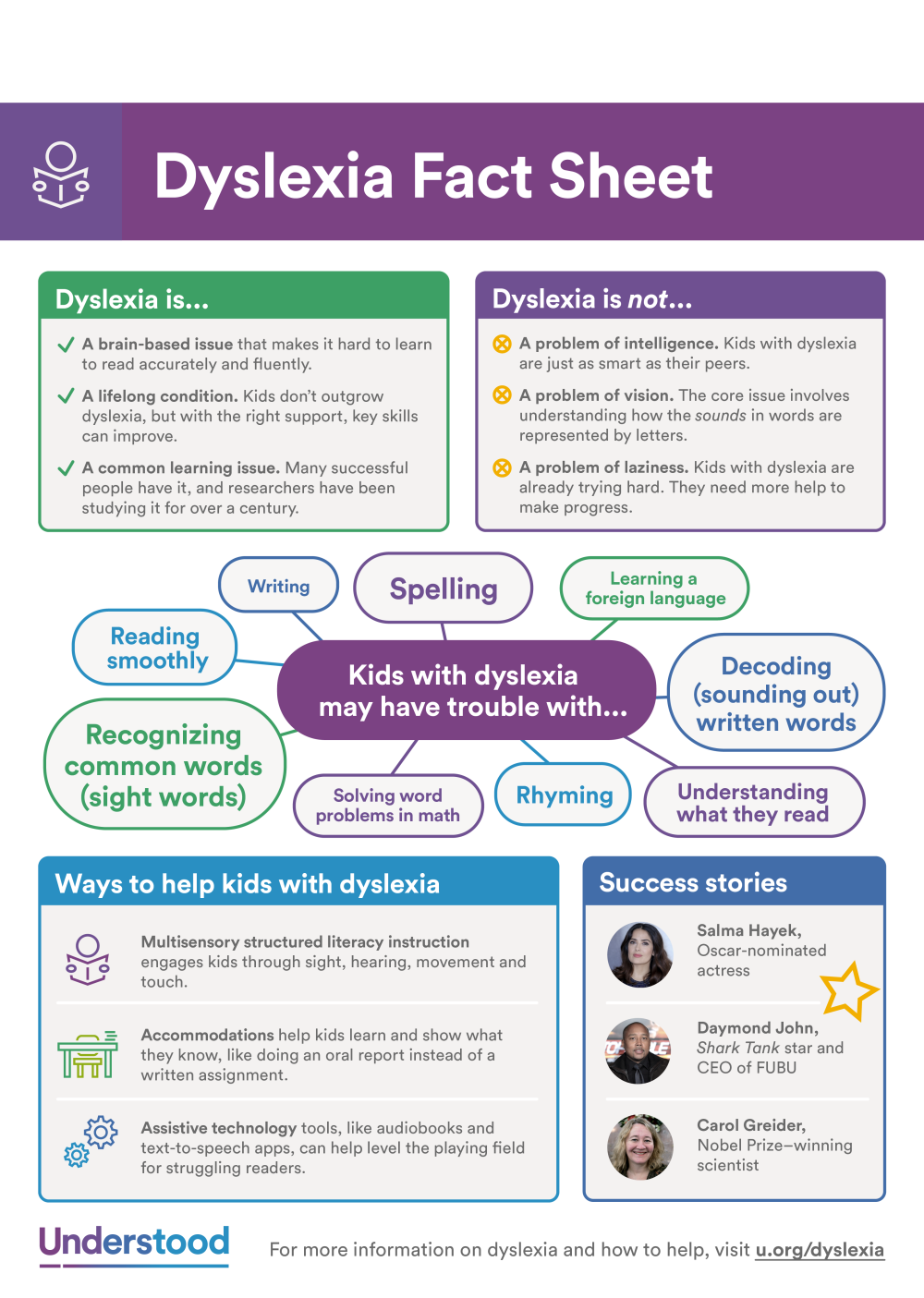
Dyslexia Awareness Quiz
October is International Dyslexia Awareness Month. The folks at Learning Ally are committed to advocating for struggling students to get the support and services they need to thrive in school. The following quiz helps to deepen your understanding of dyslexia. Please share with your family and friends to spread awareness about learning differences.
Thursday, October 10, 2019
National Right to Read Foundation Checklist
The National Right to Read Foundation (NRRF) is a non-profit organization which strives to provide parents and teachers with the information and resources they need to help students learn to read. Weeding through the vast amount of information, curricula, and methods can be a daunting task. NRFF aims to simplify the process by reviewing products, creating checklists and training materials, and providing information to help make grassroots changes in your community.

With the start of National Dyslexia Awareness Month, it's the perfect time to use the NRRF's checklist to evaluate your child’s reading program. Click on the image to use the interactive version.
Wednesday, October 9, 2019
Walk In The Shoes of a Dyslexic Simulation - Chagrin Falls, OH

About this Event
How does it feel to be an individual with dyslexia? Through a series of simulations, participants will experience the challenges individuals with dyslexia confront when performing language-related tasks. This hands-on workshop is designed to improve understanding and encourage the use of effective teaching techniques and accommodations.
This is a worthwhile public event for families and professionals who interact with dyslexics. Space is limited for reserved seating. RSVP your spot today!
Date And Time
Mon, October 14, 2019
6:30 PM – 8:30 PM EDT
Location
Chagrin Falls Intermediate Elementary School
77 East Washington Street
Chagrin Falls, OH 44022
Tuesday, October 8, 2019
The Dyslexia Dilemma: The Role of Colleges of Education
Tuesday, October 1, 2019
The Road to Decode for Dyslexia Awareness Month
 Teach My Kid to Read (TMKTR) is a verified nonprofit organization committed to providing parents, educators, and anyone interested in literacy education with the tools to help all children, including those with dyslexia, learn to read. Through advocacy and programming, TMKTR helps build awareness in the community about best instructional practices, dyslexia, and the science of reading.
 For Dyslexia Awareness Month in October 2019, TMKTR is partnering with libraries to promote evidence-based strategies that help all children learn to read. The October program, The Road to Decode, highlights essential books called decodable readers.
Why Promote Strategies for Dyslexia?
Dyslexia is one of the most common learning differences, affecting an estimated 20 percent of the U.S. population. Many parents, and even some educators, don’t understand how we learn to read or how dyslexia affects that process. So, many children with dyslexia fall into the cracks and never learn to read fluently. With early identification, appropriate interventions, and instruction, a child with dyslexia can successfully learn to read. If we can increase awareness of this common reading issue and spread the word about effective reading strategies and essential resources, such as decodable books, more children in New York State will learn to read, creating a pathway to future academic and professional success.
What Are Decodable Books?
 Decodable books use words that are easier for new readers to sound out and recognize. Decodable books enable a child to use correct print-to-sound or phonics pathways, resulting in greatly improved reading skills. The intent of decodable books is that children will read independently, using their knowledge of phonics to decode unfamiliar words. Why guess when you can read! Decodable books enable readers to develop effective reading strategies and to become more fluent readers. They help all children learn to read, but are especially valuable in helping children with dyslexia.
About The Road to Decode
For the month of October, Teach My Kid to Read will provide library partners with information about decodable readers, a suggested book list highlighting decodable books from several publishers, a poster, videos, access to an online course, and other educational materials. Additionally, they will provide workshops or additional programming upon request.
Decodable books use words that are easier for new readers to sound out and recognize. Decodable books enable a child to use correct print-to-sound or phonics pathways, resulting in greatly improved reading skills. The intent of decodable books is that children will read independently, using their knowledge of phonics to decode unfamiliar words. Why guess when you can read! Decodable books enable readers to develop effective reading strategies and to become more fluent readers. They help all children learn to read, but are especially valuable in helping children with dyslexia.
About The Road to Decode
For the month of October, Teach My Kid to Read will provide library partners with information about decodable readers, a suggested book list highlighting decodable books from several publishers, a poster, videos, access to an online course, and other educational materials. Additionally, they will provide workshops or additional programming upon request. How Can You Help?
Design, printing and shipping costs are expensive! Due to demand for the program throughout New York and other states, TMKTR is asking for your help so they can support more libraries throughout New York, and the other states that want to raise awareness of dyslexia and help more kids learn to read! To purchase your own Road to Decode t-shirt visit https://www.bonfire.com/teach-my-kid-to-read/. Learn more about us at www.teachmykidtoread.org
Follow Teach My Kid to Read and their Road to Decode program on Facebook and Twitter.
Thursday, April 11, 2019
Dyslexia and Visual Processing Issues
In recent months the topic of vision
problems and their relation to dyslexia has surfaced time and time again. Most
experts believe that dyslexia is a language-based disorder. While vision
problems can interfere with the process of learning, studies have shown that
vision problems are not the cause of primary dyslexia or learning
disabilities. Although unrelated to one another, it is important to keep in mind that it is always possible for a child to have both issues.
As stated on Understood.org, "Dyslexia and issues with visual perception
and processing might seem like they’d go hand in hand. They are very different
issues, however. Dyslexia involves trouble with processing language. It causes
difficulty with reading, writing and other skills.
Visual processing issues involve trouble with processing information the eyes see. So, if a child with visual processing issues is reading, he may have trouble processing the words he sees on a page. That may be why some people confuse visual processing issues and dyslexia."
The infographic from the Southport
CoLab and FCRR helps provide a snapshot of this topic.
To learn more about the differences between dyslexia and visual problems be
sure to also click on the link here to visit Understood's chart to see a side by side comparison of the similarities and differences between dyslexia and visual processing issues.

Subscribe to:
Posts (Atom)


