
Showing posts with label Understanding Dyslexia. Show all posts
Showing posts with label Understanding Dyslexia. Show all posts
Thursday, October 17, 2019
Tuesday, October 15, 2019
Dyslexia Awareness Quiz
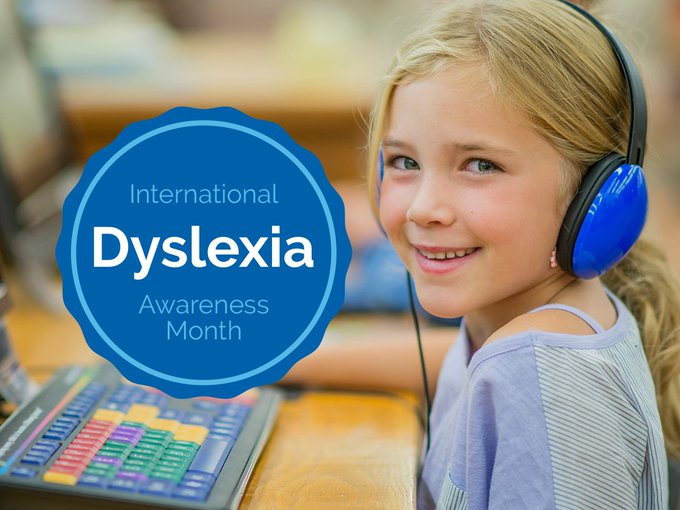
October is International Dyslexia Awareness Month. The folks at Learning Ally are committed to advocating for struggling students to get the support and services they need to thrive in school. The following quiz helps to deepen your understanding of dyslexia. Please share with your family and friends to spread awareness about learning differences.


Wednesday, October 9, 2019
Walk In The Shoes of a Dyslexic Simulation - Chagrin Falls, OH

About this Event
How does it feel to be an individual with dyslexia? Through a series of simulations, participants will experience the challenges individuals with dyslexia confront when performing language-related tasks. This hands-on workshop is designed to improve understanding and encourage the use of effective teaching techniques and accommodations.
This is a worthwhile public event for families and professionals who interact with dyslexics. Space is limited for reserved seating. RSVP your spot today!
Date And Time
Mon, October 14, 2019
6:30 PM – 8:30 PM EDT
Location
Chagrin Falls Intermediate Elementary School
77 East Washington Street
Chagrin Falls, OH 44022
Tuesday, October 8, 2019
The Dyslexia Dilemma: The Role of Colleges of Education
Thursday, May 2, 2019
Student with Dyslexia Discovers What It’s Like to Read: Emery’s Story
Emery is a 6th grade student with dyslexia. She thought she would never learn how to read. Emery would get angry at herself because she could not understand the words she was reading or read like other kids.
At the age of 7, Emery was diagnosed with dyslexia. With the support of her family and dyslexia resources like the Bookshare ebook library and Scottish Rites, Emery’s reading and school experience pivoted 180 degrees. Using specialized audiobooks from Bookshare, she was able to learn how to track, decode, and understand that there was more to reading than word-for-word. She finally discovered what it was like to read for everyone.
In this touching video, hear the before and after of Emery’s reading experience, as well as the thoughts and insights of her parents, Brandy and Mac.
Please share Emery’s story with others. If you or someone you know has dyslexia, or struggles with reading due to reading barriers like a learning disability, blindness, vision loss, or cerebral palsy, learn how Bookshare ebooks can make reading easier.
 Bookshare is an ebook library for people with reading barriers and is FREE for U.S. schools and students with qualifying disabilities.
Source: www.bookshare.org
Bookshare is an ebook library for people with reading barriers and is FREE for U.S. schools and students with qualifying disabilities.
Source: www.bookshare.org

Tuesday, October 16, 2018
Accommodating Students With Dyslexia

Dyslexia is one of the most common disabilities affecting approximately 1 in 5 individuals (see the previous WIA blogpost focusing on Learning Ally's 1 in 5 Initiative). It does not reflect an overall defect in language, but a localized weakness within the phonologic module of the brain, which is where sounds of language are put together to form words or break words down into sounds.
Often times individuals with dyslexia are mistaken as less cognitively intact while the truth is....most of the time these said individuals are of average to above average in intelligence and exceed in their creativity. Although we are living in 2018, schools are still not designed to be accessible for all learners and many educators are not provided the proper training to identify and tools to support dyslexic students. This ripple effect causes many students to go through their educational career compensating for their deficits, experiencing undue stress and prohibiting students from reaching their full potential. The underlying message here is knowledge and tools are powerful and impactful, which is why I am sharing the following article, Accommodating Students with Dyslexia by Jessica Hamman, focuses on five easy-to-implement accommodations that can make class less stressful and more manageable for students with dyslexia.

Thursday, October 11, 2018
Take the ZYX Challenge!

The ZYX Challenge is an idea that was created last spring by Jasleen Toor and friends all currently ninth graders living in New Jersey. They have created ZYX Challenge social media accounts for Instagram, Twitter, and Facebook with the goal of raising funds and awareness for IDA (International Dyslexia Association).
We ask each of you to take the Challenge and post it on social media.Encourage your kids, friends, and family to do the same. It’s a fun and easy way to raise awareness and show your support.
Here’s how it works:
- Make a video of your attempt to say the alphabet backwards in under 45 seconds. Open the video with a brief introduction such as “I’m taking the challenge to support the millions of kids in schools who struggle daily with dyslexia.”
- If you make a mistake or are unable to complete the challenge, make a donation to IDA on this page: http://idysa.convio.net/goto/zyxchallenge
- Challenge another person to do the same and post it on Facebook, Instagram, and Twitter using the hashtags #ZYXChallenge and #UntilEveryoneCanRead
Get ready…ZYXWVUTSRQPONMLKJIHGFEDCBA!
Tuesday, October 9, 2018
5 Important Steps to Navigating Dyslexia

Source: https://learningspecialistmaterials.blogspot.com/
Thursday, October 4, 2018
The Creative Brilliance of Dyslexia | Kate Griggs | TEDxBrighton
Even in 2018, there are many misconceptions and lack of awareness when it comes to dyslexia. The month of October is dedicated to bringing awareness to dyslexia to help empower those living with dyslexia and educate those working with students with dyslexia.
The following TEDx Talk featuring Kate Griggs helps us to re-think our perception in dyslexia and to change the way we approach learning differences in our day-to-day lives. Kate is passionate about helping the world understand dyslexia as a different way of thinking, not a disadvantage.
In 2005 Kate founded dyslexia charity Xtraordinary People, uniting the UK dyslexia charities and devising and leading a high-profile campaign, which culminated in the UK government’s Dyslexia Review. Kate was given an award by former Prime Minister Gordon Brown in recognition of her campaigning work. This talk was given at a TEDx event using the TED conference format but independently organized by a local community. Learn more at https://www.ted.com/tedx
The following TEDx Talk featuring Kate Griggs helps us to re-think our perception in dyslexia and to change the way we approach learning differences in our day-to-day lives. Kate is passionate about helping the world understand dyslexia as a different way of thinking, not a disadvantage.
In 2005 Kate founded dyslexia charity Xtraordinary People, uniting the UK dyslexia charities and devising and leading a high-profile campaign, which culminated in the UK government’s Dyslexia Review. Kate was given an award by former Prime Minister Gordon Brown in recognition of her campaigning work. This talk was given at a TEDx event using the TED conference format but independently organized by a local community. Learn more at https://www.ted.com/tedx
Tuesday, October 2, 2018

Wednesday, September 5, 2018
Webinar Wednesday: What Dyslexia Red Flags Look Like for Different Students in Different Grades
What Dyslexia Red Flags Look Like for Different Students in Different Grades

 About the Presenters
 Tracy Block-Zaretsky is a co-founder of the Dyslexia Training Institute. She has provided remediation for children and adults with dyslexia for the past 20 years and has developed and taught workplace and family literacy programs. She is a certified special education advocate assisting parents and children through the Individual Education Plan (IEP) and 504 Plan process. She is a past president of the San Diego Branch of the International Dyslexia Association. Tracy has training in Structured Word Inquiry, the Orton-Gillingham approach, Lindamood-Bell programs, Read Naturally and a variety of reading and writing assessments. She co-created and produced, Dyslexia for a Day: A Simulation of Dyslexia, and has provided professional development for educators and training for parents at numerous conferences, private on-site trainings and online courses and webinars. Tracy is also a parent of a child with dyslexia, dysgraphia, ADD and Executive Function Disorder.
Wednesday, September 12, 2018 @ 5:00 pm - 6:00 pm EDT
Presented by Kelli Sandman-Hurley, Ed.D., Co-Founder, Dyslexia Training Institute; and Tracy Block-Zaretsky, Co-Founder, Dyslexia Training Institute
Sponsored by Learning Ally
Sponsored by Learning Ally
edWeb members can download a personalized CE certificate from their edWebinar transcript the day after the presentation. Join here!
Dyslexia occurs on a continuum and the red flags in one student might not be the same as the red flags for another student. When these warning signs go undetected, students develop an academic gap that grows as they move from elementary to middle to high school.
In this edWebinar, Kelli Sandman-Hurley, Ed.D and Tracy Block-Zaretsky, Co-Founders of the Dyslexia Training Institute, will use case studies to uncover the red flags across different grade levels to illustrate the many ways dyslexia can manifest in different students. By understanding the warning signs, teachers can begin to provide interventions and accommodations that help to close the gap between a student’s decoding capability and their ability to comprehend grade-level content.
This edWebinar is especially beneficial for K-12 administrators to be able to support staff in identifying students early, a crucial step to ensure the needs of dyslexic students are met. There will be time to get your questions answered after the presentation.
About the Presenters
Kelli Sandman-Hurley, Ed.D. is an author and co-founder of the Dyslexia Training Institute. Dr. Kelli is a certified special education advocate assisting parents and children through the Individual Education Plan (IEP) and 504 Plan process. She has studied Structured Word Inquiry, the Orton-Gillingham approach, Lindamood-Bell, RAVE-O and Read Naturally. Dr. Kelli is a past president of the San Diego Branch of the International Dyslexia Association and is currently a writer-at-large for IDA. She is a dyslexia consultant working with schools to improve services offered to students with dyslexia and training teachers. She co-created and produced Dyslexia for a Day: A Simulation of Dyslexia, and she is a frequent speaker at conferences. She is also the author of the well-received book, Dyslexia Advocate! How to Advocate for a Child with Dyslexia within the Public Education System and the upcoming Dyslexia and Spelling: Making Sense of it All. She received her doctorate in literacy with a specialization in reading and dyslexia from San Diego State University and the University of San Diego. She is currently completing an MA in linguistics.
Tracy Block-Zaretsky is a co-founder of the Dyslexia Training Institute. She has provided remediation for children and adults with dyslexia for the past 20 years and has developed and taught workplace and family literacy programs. She is a certified special education advocate assisting parents and children through the Individual Education Plan (IEP) and 504 Plan process. She is a past president of the San Diego Branch of the International Dyslexia Association. Tracy has training in Structured Word Inquiry, the Orton-Gillingham approach, Lindamood-Bell programs, Read Naturally and a variety of reading and writing assessments. She co-created and produced, Dyslexia for a Day: A Simulation of Dyslexia, and has provided professional development for educators and training for parents at numerous conferences, private on-site trainings and online courses and webinars. Tracy is also a parent of a child with dyslexia, dysgraphia, ADD and Executive Function Disorder.
Tuesday, January 16, 2018
Accommodating Students with Dyslexia: 12 Strategies for Success

What makes it difficult to accommodate students with dyslexia is that each student has their own unique strengths and weaknesses. Yes, two students with dyslexia don’t have the same pattern of cognitive processing deficits. In fact, there are a number of profiles that can lead to this diagnosis. In addition, there are a number of specific cognitive skills that can cause symptoms of dyslexia. Consequently, a successful remediation often requires a tailored, individualized approach. To tap into the quickest results, I have learned that one has to look at the specific cognitive difficulties underlying the academic struggles and also develop the core skills required for reading. Then, these areas can either be strengthened or compensatory strategies can help blaze detours that lead to learning.
The following is a table that Dr. Erica Warren created to help make the pathway to success a little bit easier.
Past or Present Difficulty
|
Accommodation
|
Remedial Strategies
|
Letter reversals (b and d), symbol reversals (< and >) and words reversals (was and saw)
|
- Teachers should not take off points when students exhibit reversals.
- Color code common reversals to help students perceive the difference. For example, make the letter b, blue and the letter d, red.
|
- Provide strategies: For example, turn the greater and lesser signs into a Pacman and explain that the Pacman eats the larger number:34
 43 43
- Do fun activities that exercise abilities from the Reversing Reversals Series.
|
Trouble with reading aloud and sounding out words
|
- Provide audiobooks through organizations like Bookshare, Learning Ally, Raz-kids, and Audible
- Offer instruction in an Orton-Gillingham Based reading program
- Make reading aloud optional for struggling readers.
|
- Provide audiobooks through organizations like Bookshare, Learning Ally, Raz-kids, and Audible and encourage students to either read along or visualize the story. Encouraging learners to read along while listening can improve tracking, whole word recognition and more - learn more HERE.
- Students with learning disabilities that impact reading can qualify for a free membership at www.bookshare.org
- Offer instruction in a Orton-Gillingham Based reading program
|
Challenges with math word problems
|
- Use large graph paper to help students line up problems.
- Use multisensory math lessons.
| |
Trouble understanding jokes, punchlines, sarcasm and inferences
|
Think aloud and explain the meaning behind abstract concepts, inferences and other “hidden” meanings.
Check for understanding to make sure concrete learners fully understand any abstract concepts.
|
- Practice interpreting jokes,
- Practice finding inferences in billboards and magazine advertisements.
- Click here for other strategies.
- Use the Good Sensory Learning Higher Order Language Bundle to exercise and strengthen these skills.
|
Difficulty following a series of written or aural directions
|
- Have a student explain their understanding of an assignment and correct any misconceptions.
- Simplify directions and highlight keywords.
- Provide oral directions, check for understanding, and repeat directions - if needed.
- Offer a larger font with less content on each page.
- Provide text to speech technology.
|
- Play fun games and activities that strengthen these skills.
- Consider some basic remedial assistance with the core skills required for language processing.
|
Trouble mispronouncing words
|
- Be patient and guide the student to the correct pronunciation.
- Try not to laugh at funny mispronunciations as many kids get embarrassed and feel like they are being laughed at or made to feel stupid.
|
- Practice difficult words by coming up with your own tongue twisters.
|
Difficulty rhyming words
|
- Spend additional time on this concept and show the idea visually by taking simple words such as cat and changing the beginning consonant.
|
- Play hands on rhyming games or online ones.
|
Trouble mispronouncing words
|
- Work with a speech and language professional and help the student learn how to produce the proper letter and word formations.
|
- Help students learn how to form the sounds with their tongue and mouth.
|
Trouble telling directions
|
- Place markers on a student’s desk or body to help them with directionality. For example, they might have a ring on their right hand or a rabbit on the right side of their desk and a lamb on the left.
|
- Do fun activities that exercise directionality abilities from the Reversing Reversals Series.
|
Trouble recalling names or words
|
- Offer a word list that can help students recall important words.
- Teach the student to use a thesaurus.
|
- Teach memory strategies. Click here to learn more.
- Teach word finding strategies
|
Difficulty with spelling
|
- Do not take points off for spelling errors.
- Allow student to use a computer with a spell check.
- Use a smartphone, tablet, Echo or other device that can provide the spelling of a words upon request.
Use other types of assistive technology for spelling.
- Offer instruction in a Orton-Gillingham Based reading/spelling program
|
- Offer an individualized spelling approach.
- Provide an Orton-Gillingham based spelling program.
- Learn about Spelling strategies
|
Trouble learning how to read
|
- Provide audiobooks through organizations like Bookshare, Learning Ally, Raz-kids, and Audible
- Offer instruction in a Orton-Gillingham Based reading program
- Provide extra time when reading.
- Shorten reading assignments.
- Simplify directions and highlight keywords.
- Provide oral directions, check for understanding, and repeat directions - if needed.
- Offer a larger font with less content on each page.
- Provide text to speech technology.
|
- Offer instruction in a Orton-Gillingham Based reading program
- Play hands-on Orton-Gillingham based reading games.
- Play online Orton-Gillingham based reading games.
|
To view Dr. Erica Warren's blog, be sure to visit:
Permission was granted by Dr. Erica Warren to post and share her article directly on Where It's AT.
Wednesday, January 10, 2018
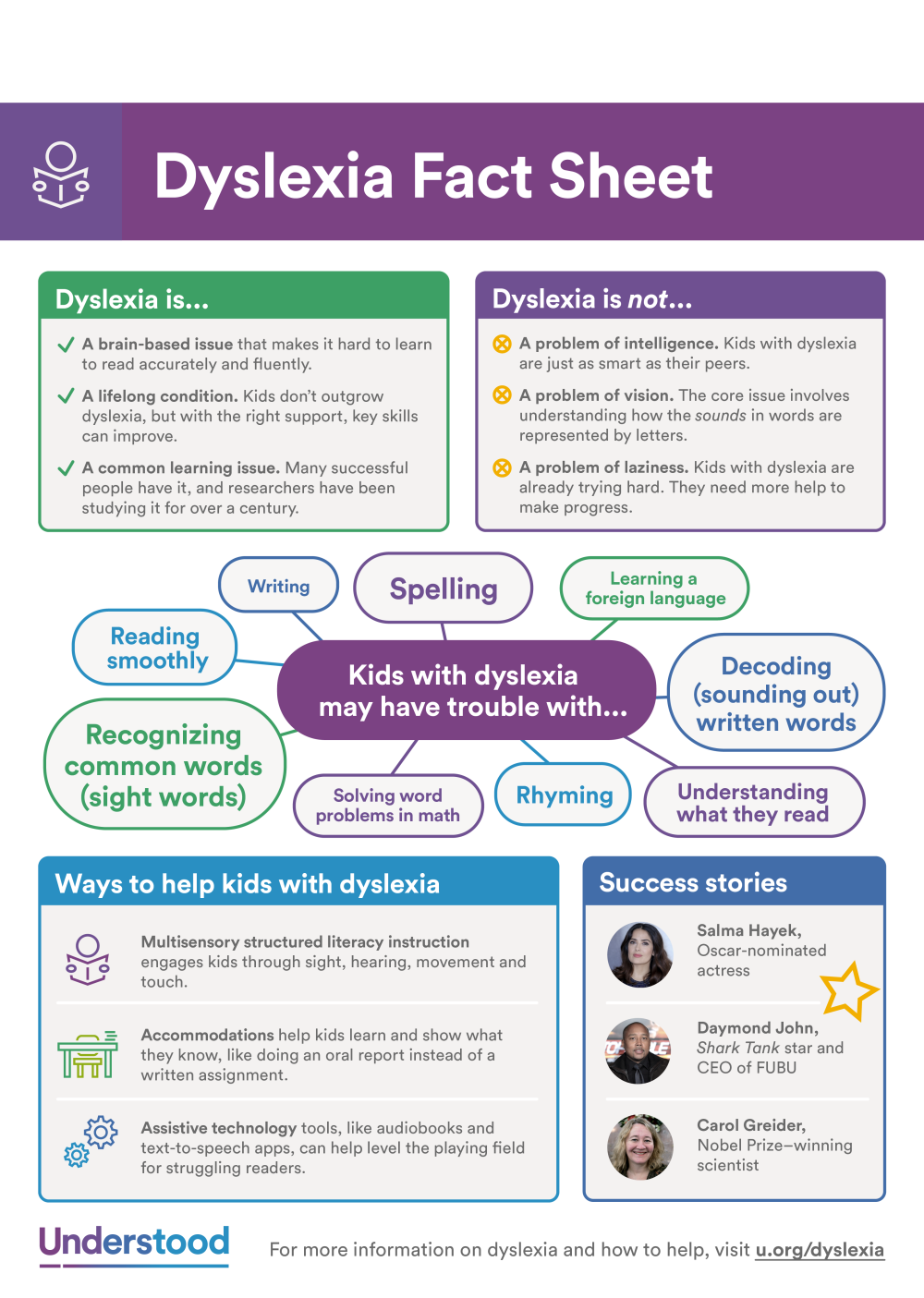
Dyslexia Fact Sheet

Looking for more information....
- Explore Understood's overview on dyslexia, which includes a video with an expert and inspiring personal stories.
- Find out what multi-sensory reading instruction can look like.
- See examples of classroom accommodations for dyslexia, and learn how kids qualify for them.
Source: Understood.org

Wednesday, January 3, 2018
9 Strengths of a Dyslexic by Nessy
When you think of the term dyslexia, do you view it as a weakness? a disability? a disadvantage compared to others? Often times, dyslexia is viewed negatively, with the emphasis on what the dyslexic individual cannot do. However, the mind of a dyslexic individual possesses many strengths too. The following list compiled by the team at Nessy highlights 9 strengths of a dyslexic.


“I recognized that I had dyslexia and then I realized I had this gift for imaging. I live in a world of patterns and images, and I see things that no one else sees. Because of dyslexia, I can see these patterns.”


Pablo Picasso (Artist)
Picasso was described by his teachers as “having difficulty differentiating the orientation of letters”. Picasso painted his subjects as he saw them – sometimes out of order, backwards or upside down. His paintings demonstrated the power of his imagination, which was perhaps linked to his the inability to see written words properly.
Be sure to also check out these previous posts featuring resources designed and shared by Nessy:

1. Seeing the bigger picture
People with dyslexia often see things more holistically.
They miss the trees but see the forest.
They miss the trees but see the forest.
“It’s as if people with dyslexia tend to use a wide-angle lens to take in the world,
while others tend to use a telephoto, each is best at revealing different kinds of detail.”
Matthew H. Schneps, Harvard University
while others tend to use a telephoto, each is best at revealing different kinds of detail.”
Matthew H. Schneps, Harvard University
2. Finding the odd one out
People with dyslexia excel at global visual processing and the detection of impossible figures. Scientist Christopher Tonkin, described his unusual sensitivity to “things out of place.” Scientists in his line of work must make sense of enormous quantities of visual data and accurately find black hole anomalies.
There are so many people with dyslexia in the field of astrophysics that it prompted research at the Harvard-Smithsonian Center for Astrophysics. Findings confirmed that those with dyslexia are better at identifying and memorizing complex images.
3. Improved pattern recognition
People with dyslexia have the ability to see how things connect to form complex systems, and to identify similarities among multiple things. Such strengths are likely to be of particular significance for fields like science and mathematics, where visual representations are key.
“I recognized that I had dyslexia and then I realized I had this gift for imaging. I live in a world of patterns and images, and I see things that no one else sees. Because of dyslexia, I can see these patterns.”
“You can’t overcome it (dyslexia); you can work around it and make it work for you, but it never goes away. That’s probably a good thing, because if dyslexia went away, then the other gifts would go away too.”
Beryl Benacerraf, M.D., Physician. World-renowned radiologist and expert in ultrasound.
4. Good spatial knowledge
Many people with dyslexia demonstrate better skills at manipulating 3D objects in their mind. Many of the world’s top architects and fashion designers have dyslexia.
“I was called stupid. Not only could I not read, but I couldn’t memorize my school work. I was always at the bottom of the class. I became very depressed.”
Richard Rogers
Richard Rogers
“I performed poorly at school – when I attended, that is – and was perceived as stupid because of my dyslexia. I still have trouble reading. I have to concentrate very hard at going left to right, left to right, otherwise my eye just wanders to the bottom of the page.”
Tommy Hilfiger
Tommy Hilfiger
5. Picture Thinkers
People with dyslexia tend to think in pictures rather than words. Research at the University of California has demonstrated children with dyslexia have enhanced picture recognition memory.
Nineteenth-century French sculptor, Auguste Rodin, could stare at paintings in museums by day and paint them from memory at night. His dyslexia meant he could barely read or write by the age of 14, with his reading skills developing much later.
6. Sharper peripheral vision
People with dyslexia have better peripheral vision than most, meaning they can quickly take in a whole scene. Although it can be hard to focus in on individual words, dyslexia seems to make it easier to see outer edges.
James Howard Jr., a professor of psychology at the Catholic University of America, described in the journal Neuropsychologia an experiment in which participants were asked to pick out the letter T from a sea of letter L’s floating on a computer screen. Those with dyslexia identified the letter more quickly.
7. Business entrepreneurs
Did you know that one in three American entrepreneurs have dyslexia?
Entrepreneurs like Thomas Edison, Henry Ford, Steve Jobs and Charles Schwab all had dyslexia. Perhaps better strategic and creative thinking could provide a real business advantage.
Entrepreneurs like Thomas Edison, Henry Ford, Steve Jobs and Charles Schwab all had dyslexia. Perhaps better strategic and creative thinking could provide a real business advantage.
“I seemed to think in a different way from my classmates. I was very focused on trying to set up a business and create something. My dyslexia guided the way we communicated with customers.”
Richard Branson
Richard Branson
8. Highly creative
Many of the world’s most creative actors have dyslexia, such as Johnny Depp, Keira Knighltly and Orlando Bloom.
“Many of the super creative designers I have worked with seemed
to have one thing in common; they suffered from dyslexia.”
Soren Petersen, Design Research PH.d
to have one thing in common; they suffered from dyslexia.”
Soren Petersen, Design Research PH.d
Pablo Picasso (Artist)
Picasso was described by his teachers as “having difficulty differentiating the orientation of letters”. Picasso painted his subjects as he saw them – sometimes out of order, backwards or upside down. His paintings demonstrated the power of his imagination, which was perhaps linked to his the inability to see written words properly.
9. Thinking outside the box – problem solving
Those with dyslexia are well known for having sudden leaps of insight that solve problems with an unorthodox approach.
This is an intuitive approach to problem solving that can seem like daydreaming. Staring out of the window is how they work, letting their brain slide into neutral and ease itself around a problem to let connections assemble.
This is an intuitive approach to problem solving that can seem like daydreaming. Staring out of the window is how they work, letting their brain slide into neutral and ease itself around a problem to let connections assemble.
Subscribe to:
Posts (Atom)


