I wrote the following blogpost as a guest bloggers for the PATINS Project. The PATINS Project is a state-wide technical assistance network that connects Indiana's local education agencies (LEAs) to Accessible Materials, Assistive Technology, Professional Development & Technical Support through the Indiana Departments of Education and Administration. PATINS helps to ensure that all students can access, participate, and progress within their general curriculum.
Click here to view the original blog post, along with their previous posts and resources.
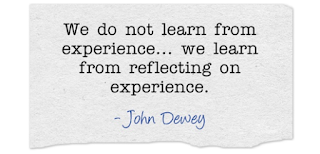
As John Dewey once said, “We do not learn from experience….we learn from reflecting on experience.” If you have spent any time over the past 15 months working in the educational system, you can unquestionably agree that the pandemic certainly provided its share of opportunities for reflection. What we once knew about education was swiftly flipped. The equivalent of literally having the rug pulled out from underneath your feet. Yet, with no notice teachers across the nation rose to the occasion to revamp every aspect of how they provided instruction to their students. Even if this looked different based on where you work or the student population you work with, the one thing educators had in common was that we were navigating uncharted territories together.
As a mother to two school-aged children and an educator for the past 20 years, I was able to view the educational impact of the pandemic from multiple lenses. Questions swirling about how our children would make up for lost months, closing educational gaps, meeting their social and emotional needs, ways to creatively provide accessible instruction with various constraints. So many unknowns. Looking back a year later, virtual students are returning to in-person learning, desk shields are being removed from classrooms, masks requirements are lifted in some establishments for those who are vaccinated, schools are beginning to reopen, and a small sense of normalcy seems to finally be on the horizon. But it’s safe to say that COVID-19 will have a lasting impact on education, casting a critical light on everything from ed tech to student equity to accessibility to school financing.
Many aspects of education were directly impacted by the pandemic leaving years for schools to successfully get students back-on-track, not only academically but also socially and emotionally. Teachers, parents and students spent the better part of the year being pushed outside of their comfort zones and likely will seek a return to the educational world they once knew. However, we can argue that some changes resulting from COVID-19 were for the better and efforts will be placed by educational leaders to maintain those changes.
With the end of the school year here or on the near horizon make time for reflection. The act of reflection provides an opportunity to pause amidst the chaos while sorting through and creating meaning from your experiences. The questions below are adapted from article Reflection Questions for Teachers and Students: Looking Back at Our Year created by Lydia Breiseth and Elena Aguilar’s Questions for Reflecting on a Year of Learning. The hope is for you to pause and think back on the challenges, the successes, the impact they had on and how it shaped yourselves, your students and families.
- What was the most difficult challenge (or series of challenges) I faced this year? my students and their families faced this year?
- What strengths did I show in addressing those challenges?
- Who or what helped me address those challenges? What helped my students and their families begin to address those challenges?
- What opportunities did those challenges create?
- What did I learn about my students’ lives, families, and past experiences? my colleagues? my school community? my local community? myself?
- What impact did I have on my students and their families?
- What impact did I have on the systems in my classroom, building, or district?
- How did I grow as an educator this year?
- How can I harness what I learned and continue to move forward with it?
- What do I anticipate facing next year? What is my plan of action?
- What has given me hope?
- Who or what was particularly helpful in a moment when I needed it?
- How did I take care of and nurture myself this past year?
If the past year has allowed us to reflect on anything, it’s that our teachers, students and their families are not only resilient but adaptable. It has taught us that our educators should not be taken for granted. It has taught us that not all COVID-19 changes were necessarily obstructive. It has taught us the powerful impact technology has had on how instruction is delivered. It has taught us a valuable reminder of the importance of in-person interactions and engagement both in and out of school settings. It has taught us there is more work to be done to change the challenges of our educational system and the inequities many students face. It has taught us to place priority on the things and people who matter most to us. It has taught us to celebrate small victories. It has taught us to be flexible and to step outside of our comfort zones. And most importantly it has taught us to be forgiving and patient with ourselves as we continue to navigate these unchartered waters.
As we near the close to another unprecedented school year I can say with certainty that although the path we journeyed may have been divergent, with hills and valleys along the way, we emerged changed but maybe in some ways for the better.