Pages

Wednesday, November 16, 2016

Webinar Wednesday: Assistive Tech for Writing Worksheets


Join the Learning Ally community on Thursday, November 17, 2016 for a free webinar geared towards parents and educators who work with dyslexic students. When the term dyslexia is used, often times people think this involves difficulty when reading. However, often times students with dyslexia not only struggle with reading, but also experience difficulty with transferring their ideas into written form. Whether it's a comorbid disability like dysgraphia or just a challenge to get thoughts onto paper, there are many assistive technology options that can help.

One of those options is SnapType, which was developed by Amberlynn Gifford, an Occupational Therapy Graduate Student. She noticed students were struggling to complete worksheets. 

By signing up you can participate and ask questions during the webinar live, or watch the recording at a time convenient for you, as the application is demonstrated. Click the link below to register!
**I am not endorsed or affiliated with Learning Ally or SnapType. I just enjoy sharing great resources when I come across them.**

Tuesday, November 15, 2016

Accessibility Features in iOS10


With so many improvements and updates to the latest iOS, this infographic from Call Scotland highlights three, out of the many, improved accessibility features which will provide support to struggling learners. To access a printable version of this infographic click here

Source: Call Scotland

Monday, November 14, 2016

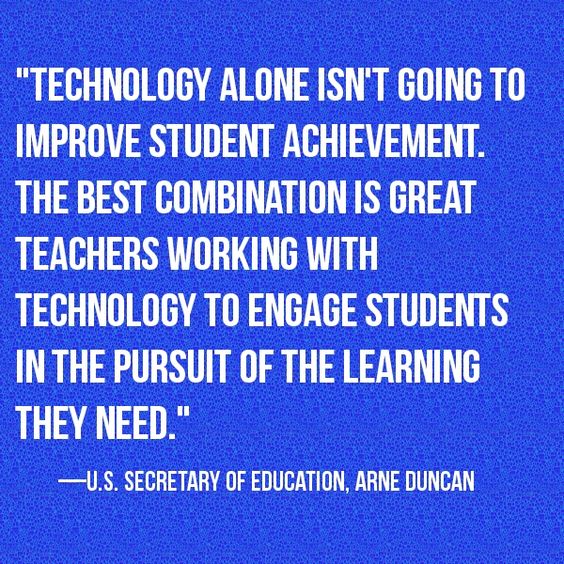
Motivational Monday


Friday, November 11, 2016

Honoring All Who Served

Thursday, November 10, 2016

The Impact of Assistive Technology

The article featured here on Where It's AT, written by Karen Janowski (@karenjan) , touches upon the important role assistive technology plays within the educational setting. Although assistive technology must be considered for all students based on the unique needs of the student, often times, IEP teams focus on the assistive technology needs of students with severe physical, intellectual, communication, and sensory impairments. With many advances in technology over recent years, the assistive technology has become far reaching and becoming more commonplace within the general education and special education classroom settings.


Through this article you can see the profound positive impact that assistive technology can have on all learners. Read the article below or click here to access the original article.


Does assistive technology make a difference? 

Don't take my word for it.


Ask the fifth-grade student who typically took four months to read one book and was finally able to read four books in one month because of her use of technology (VoiceDream Reader with Bookshare membership). She recommended books to her friends. How do you think she felt being able to do that for the first time ever?


Ask the high school student with written expression challenges who received support through the Insert Comments feature in Google Docs. He stated, "I'm getting help when I'm writing instead of after I'm done."


Ask the high school autistic student who up until that time was dependent on others for being his voice since he wasn't provided with the technology he needed. For the first time, he could use his device and finally tell someone, "Leave me alone!"

Ask the elementary age student who had a meltdown any time he was asked to write. He used recording technology and was able to independently record his thoughts instead of needing to dictate to an adult (which promoted dependence).


Ask the student who is now able to use vocabulary which reflects his superior language skills when composing text instead of using words that he was able to spell independently. (Word prediction or spellcheck built-in Google Docs)

Ask the student who is now recording his thoughts for the first time instead of having to be dependent on someone else who scribes for him.


Ask the 18-year-old student who struggled with significant reading issues (reading at a second grade level) but felt successful when he read grade level text by adjust the visual presentation and reading rate to what worked for him. (Very large font size and focused reading screen with only two words on a line).


Ask the ninth grade student who saw the font size in the print copy of To Kill a Mockingbird and dreaded trying to read through the text on his own and then was introduced to a reading app. He listened to the book while he followed the text and described it as the best book he ever read.


Ask the senior in high school who attends a very prestigious school for students with learning disabilities who was introduced to assistive technology the summer before his senior year and asked, "Why didn't anyone show me these things earlier?"


Ask the middle school student who doesn't want to be seen as different but realizes the use of technology makes learning possible. Why is he in an environment where he is "different"? Why don't we make technology available to everyone, embedded, proactive, universal, adjusting to variability within our classrooms? This is Universal Design for Learning.


Ask the brilliant high school student with dysgraphia resulting in illegible handwriting which interfered with his ability to demonstrate his learning in AP calculus. He was introduced to technology which bypassed his challenges and excelled (Efofex).


Ask the student who was given packets and packets of worksheets and information that was paper-based and was provided a device (iPad with specific apps) which stored all his materials. He no longer struggled with managing his materials and kept them organized in folders on his device. No more zeroes for failing to hand in completed assignments.


Does (Assistive) Technology make a difference in the lives of students? It's a resounding, "Yes!" So why don't all students who need it have access to it? I will try to answer that question in another post.

It is time to ensure all students have access to the technology they need.

Source: Ed Tech Solutions: Teaching Every Student

Wednesday, November 9, 2016

Why Audiobooks Work Infographic

Often times conversations arise regarding the effectiveness of audiobooks. The following infographic provided by Learning Ally and We Are Teachers debunks many of the pervasive myths associated with audiobooks and highlights the benefits of implementing them within your home or classroom. 

Why audiobooks work in the classroom #infographic
To access a printable version of this infographic click here! 

Tuesday, November 8, 2016

Understanding Assistive Technology

Today's post highlights a Simply Said video, which provides a clear and concise definition to understand Assistive Technology. Simply Said is an ongoing video series designed by the PACER Center to explain complex topics in easy-to-understand language. In addition to the video posted below, the PACER Center's website offers other videos in the series that cover topics from Assistive Technology to AT Loan Libraries and Accessible Instructional Materials (AIM). Visit the PACER Center's website to browse their available resources or sign up for one of their free webinars (featured in an upcoming post).


Source: Pacer Center